
St. James Parish Arrest Records and Charges
Arrest records in St. James Parish start on the law-enforcement side. The St. James Parish Sheriff's Office may create arrest, booking, incident, crash, audio, body camera, dash camera, and custody records when its deputies or corrections staff handle an event. The sheriff's official public-records page explains that sheriff records must be requested in writing and that some criminal offense records are privileged until adjudication. That is a key local limit. A sheriff arrest record can show that an arrest occurred, but it does not prove that a filed court charge exists or that the person was convicted.
Court charges after arrest follow a different path. The 23rd Judicial District Attorney prosecutes criminal matters for the district that includes St. James Parish. After arrest and screening, the DA decides whether to file charges, what charges to file, and whether later amendments are needed. The St. James Parish Clerk of Court maintains the criminal court file once the case is in court. For custody status and booking fields, use the jail roster on the inmate records page. For pleas, motions, dispositions, and sentences, use the full criminal case file.
The sheriff app links to the St. James Parish crime map, which is useful for seeing law-enforcement activity, not court charges.
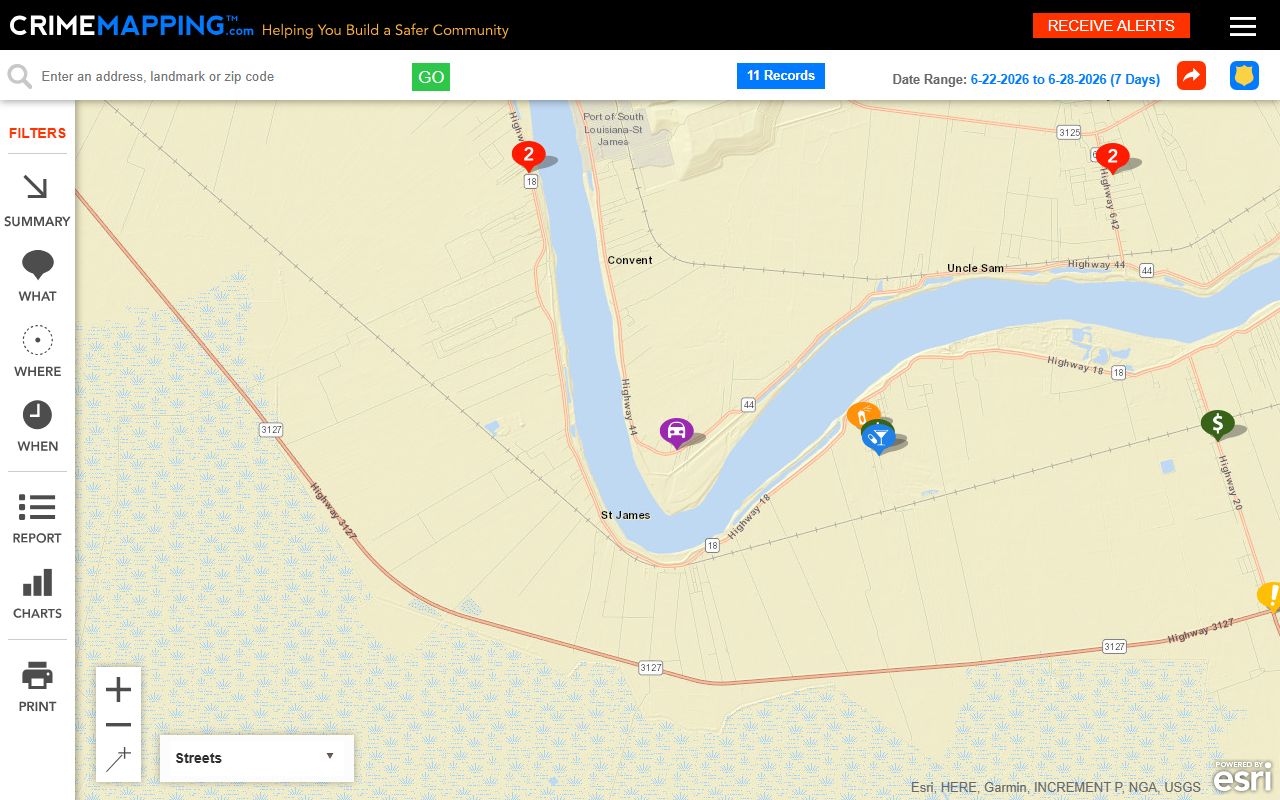
The map can help identify reported activity areas, but formal St. James Parish court charges still come from the DA and clerk channels after a case is filed.
Find St. James Parish Arrest Charges
St. James Parish does not publish one broad official court-charge search portal in the local sources reviewed. The clerk's online records page points to LCRAA for conveyance and mortgage records only, so it should not be treated as a criminal charge database. For court charges, use the clerk criminal division and the 23rd Judicial District Court context. For sheriff-created arrest records, use the sheriff public-records request process. For current custody, use the sheriff inmate feed and VINELink.
- Start with the record type. Booking and arrest reports are sheriff records; filed charges and court minutes are clerk or court records.
- For court charges, contact the St. James Parish Clerk of Court criminal lines at 225.562.2389 or 225.562.2271.
- For sheriff arrest or offense records, submit a written public-records request to the sheriff's public information officer.
- For current custody after an arrest, check the sheriff inmate feed before assuming a charge has reached court.
- For the case outcome, check the criminal court record because a charge can be changed, dismissed, reduced, or resolved by plea or trial.
The sheriff app also links the Police to Citizen online reporting portal.
That portal supports online reporting and law-enforcement workflow, but a report entry is still distinct from a filed St. James Parish court charge.
How Court Charges Begin
Once the arrest side is complete, a prosecutor reviews reports, probable cause, witness facts, and any agency referral. The court charge record begins when a charging document is filed or presented through the proper criminal procedure. St. James Parish is part of the 23rd Judicial District Court, so formal criminal filings are district-court matters. A person can be booked on one suspected offense and later face a different filed charge, several charges, a reduced charge, or no filed charge at all.
| Charging Document | Who Uses It | What It Does |
|---|---|---|
| Complaint | Law enforcement or prosecutor | States the accusation used to start or support a criminal matter. |
| Bill of information | District attorney | Files formal charges without a grand-jury indictment when allowed. |
| Indictment | Grand jury | Accuses a person of a serious offense after grand-jury action. |
The document type matters because it shows the stage and authority behind the charge. It does not, by itself, show guilt. The record must be read with later minute entries, motions, plea entries, verdicts, dismissals, and sentencing orders.
St. James Parish Charge Status
Charge status is often the most important part of a St. James Parish court charge record. A charge listed soon after arrest may not be the charge that ends the case. Prosecutors can amend the charge, the court can dismiss a count, and a plea can resolve fewer counts than were first filed. The clerk criminal file and court minutes are the best channels for reading those changes because they track court events after the sheriff's arrest record is created.
| Status | What It Means | Why It Matters |
|---|---|---|
| Pending | The filed charge has not reached final disposition. | Future court dates, motions, or plea talks may change the record. |
| Amended or reduced | The filed charge changed from an earlier version. | The current charge may be less severe or legally different from the arrest allegation. |
| Dismissed | The court or prosecutor ended that count. | A dismissed charge is not a conviction, though the record may still exist unless restricted. |
| Nolle prosequi | The prosecutor declined to pursue the charge. | The case record should be checked for whether all counts or only some counts were affected. |
For sheriff-created reports, the official public-records request page gives the request route and restrictions.
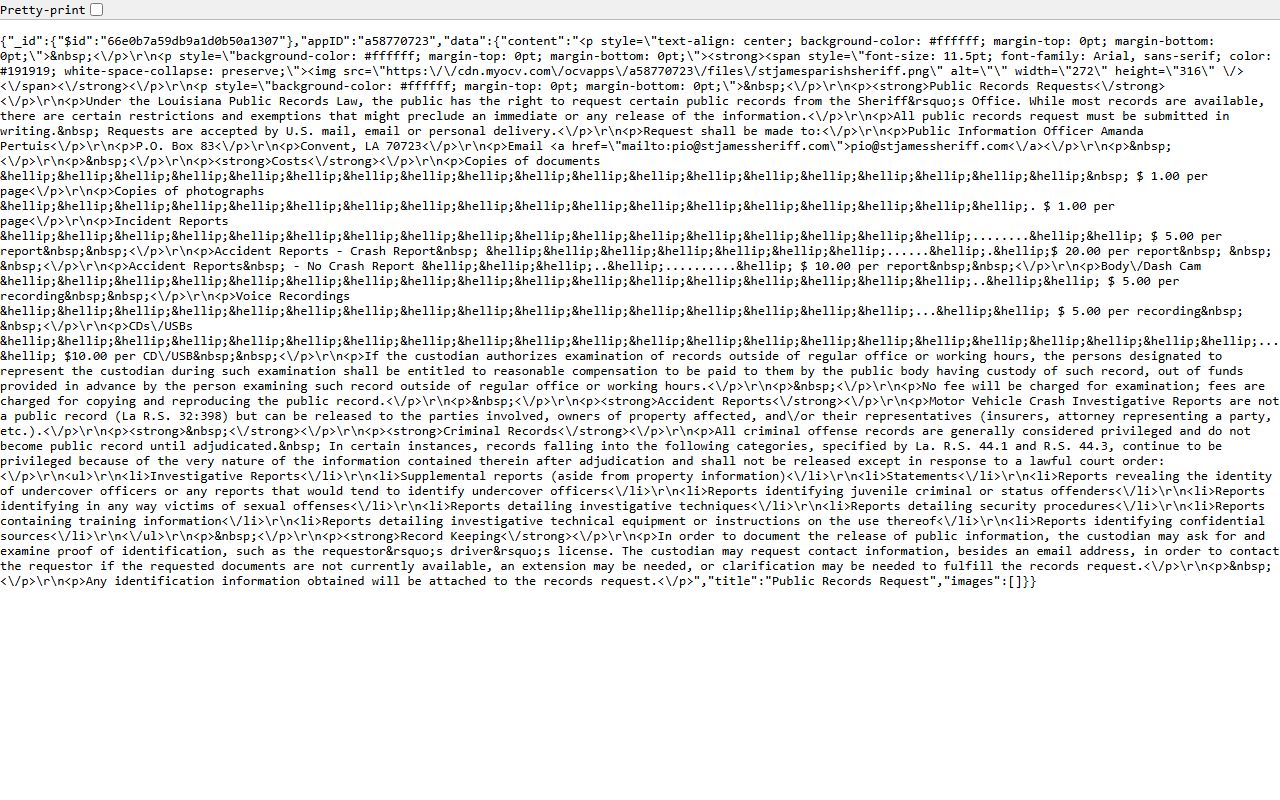
The request page is especially important when the needed document is an incident report, crash report, recording, or other sheriff record rather than a clerk case file.
Charges vs Convictions
A St. James Parish charge is an accusation filed in court. A conviction is an outcome after a guilty plea, trial verdict, or other legally sufficient finding. The distinction matters for jobs, housing, licensing, family matters, and public discussion. A person may have an arrest record with no filed charge, a filed charge with no conviction, or a conviction on a charge that differs from the first arrest allegation.
| Point of Comparison | Charge | Conviction |
|---|---|---|
| Stage | Accusation after arrest or screening | Final or accepted finding of guilt |
| Who creates it | District attorney or grand jury | Court through plea, verdict, and judgment |
| What to check | Charging document and current status | Disposition, sentence, probation, or appeal entries |
| Risk of misread | Can be mistaken for guilt | Can be mistaken for every original count |
Sealed and Expunged Charges
Louisiana expungement rules affect public access to some criminal records, but they do not mean every government trace vanishes for all purposes. Louisiana Code of Criminal Procedure Article 971 defines expungement terms, and Article 976 covers certain misdemeanor arrest and conviction situations. For a St. James Parish criminal matter, the person usually needs the arrest date, agency, docket number, charge, disposition, and any sentence or dismissal information before filing an expungement request through the court.
Three access limits matter most. A sealed charge is blocked from public access by law or court order, and the clerk can explain what proof of authority is required. An expunged charge is restricted through the Louisiana court process, not by asking the sheriff to delete a record. A privileged investigation can limit law-enforcement material while the sheriff reviews the request and any continuing restriction.
Louisiana law on restricted juvenile-related records helps explain why some charge details are not public.
Juvenile identifiers and protected child-status matters should not be treated like ordinary public arrest records or adult court charges.
Access Channels for Charge Records
St. James Parish charge access works best when each office is used for the records it actually keeps. The clerk is the court-file contact. The sheriff is the law-enforcement records contact. The DA prosecutes charges but is not the ordinary public-records counter for certified court copies. The inmate feed is useful when the person is in custody, but the inspected sample entries did not show bond, court date, warrant number, or populated charge descriptions.
- Filed criminal charges: use the St. James Parish Clerk of Court criminal division at 225.562.2389 or 225.562.2271.
- Arrest, incident, crash, or recording records: use the sheriff public-records request process with a written request to the PIO.
- Current jail custody: use the sheriff inmate search and VINELink, remembering that roster fields may omit court disposition.
- Case outcome: use the clerk criminal file or court minutes to check the disposition, plea, sentence, and dismissed counts.
Reports, Crashes, and Charge Limits
Not every sheriff record is a court charge record. Accident reports are routed through the sheriff app link to LexisNexis Police Reports, and Louisiana crash reports are subject to separate access rules under R.S. 32:398. Incident reports are requested through sheriff records channels, and the sheriff public-records notice says some criminal offense records stay privileged until adjudicated. That means an arrest or report search can be incomplete if the related case is still pending or legally restricted.
The sheriff app routes accident-report users to LexisNexis Police Reports.
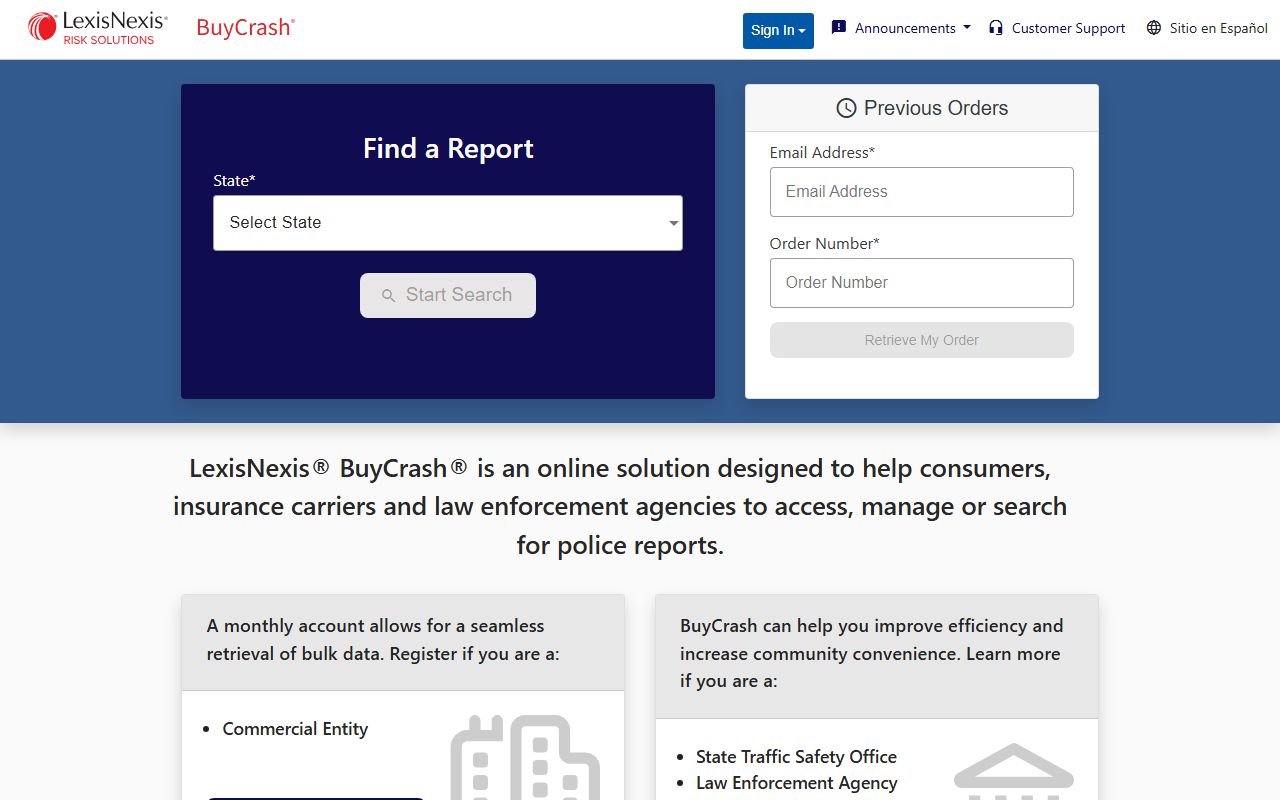
Crash-report access should be separated from court charges because a traffic crash report is an investigative record, not the criminal or traffic case file itself.
Restricted St. James Parish Charge Records
Restricted charge records include juvenile-identifying reports, adoption-related court material, sealed or expunged criminal cases, sexual-offense victim identifiers, confidential source details, undercover officer information, security procedures, and investigative techniques. The sheriff public-records page also warns that criminal offense records are generally privileged until adjudicated, and some categories may remain privileged after adjudication except by lawful court order. Those limits apply even when the public can see a related arrest, custody, or court event.
Important: A St. James Parish arrest record is not proof that the person was convicted of the listed charge.
When the record may affect a legal right, use the originating office and ask for certified copies or written status. A printed roster result, crime map view, or public-records response may not include every charge amendment, dismissal, plea, or sentence.
Public Record Search
Sponsored Results